Sumitomo Electric Advances Vanadium Flow Battery Deployment with Fourth-Phase Installation in Kashiwazaki

Date: 08 Jul 2026 |
Source: SUMITOMOELECTRIC.COM, 8 July 2026
Sumitomo Electric Industries has commenced construction of the fourth phase of its vanadium flow battery (VFB) energy storage project in Kashiwazaki City, Japan, further reinforcing the growing role of long-duration energy storage in supporting renewable energy integration and decarbonisation.
The new installation, ordered by Kashiwazaki IR Energy Co., Ltd., will provide 1 MW / 8 MWh (8,000 kWh) of energy storage capacity and is scheduled to begin operation in spring 2027. Upon completion, the four-phase project will deliver a total installed capacity of 32 MWh, making it one of Japan's largest municipal vanadium flow battery installations.
The project forms part of Japan's FY2026 Program for Promoting Public Understanding of Advanced Energy Structure and Transformation and features battery equipment that has achieved the JC-STAR Level 1 cybersecurity compliance label, demonstrating compliance with Japan's cybersecurity requirements for connected energy infrastructure.
Kashiwazaki City, historically known for its role in Japan's petroleum and nuclear energy sectors, is pursuing an ambitious transition towards becoming a carbon-neutral city through greater deployment of renewable energy. The new VFB system will store surplus electricity generated from renewable sources such as solar power during periods of low demand and discharge it during peak demand, improving grid flexibility, increasing renewable energy utilisation, and reducing electricity costs through participation in Japan's wholesale electricity market. The system is designed to deliver 1 MW of power continuously for eight hours, illustrating the advantages of long-duration energy storage.
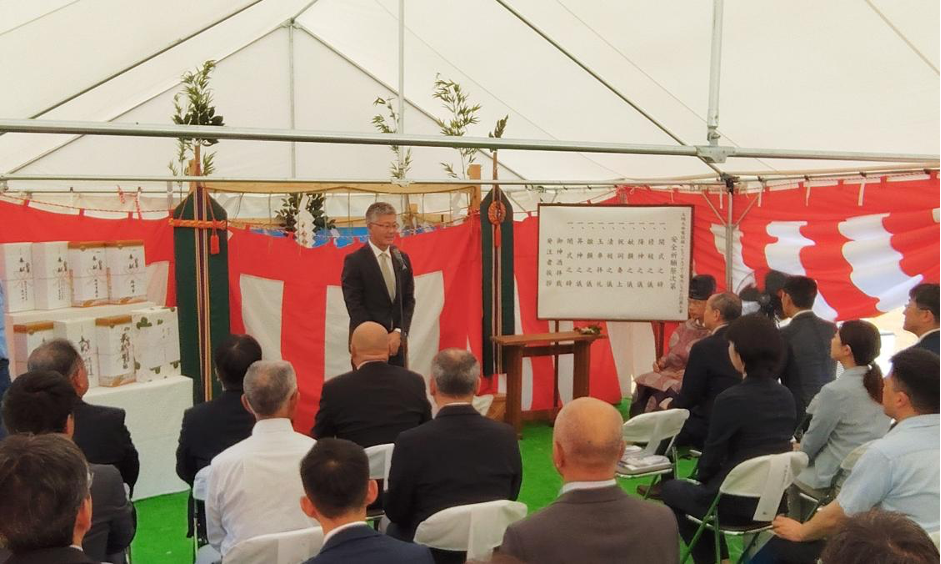
A groundbreaking ceremony marking the start of construction was held on 8 July, attended by representatives from Kashiwazaki City, Kashiwazaki IR Energy, Sumitomo Electric, and other project stakeholders. The traditional Shinto ceremony highlighted the commitment of all parties to safe and successful project delivery.
Vanadium flow batteries are increasingly recognised for their suitability in supporting renewable electricity systems due to their high safety, non-flammable electrolyte, long operational life, unlimited cycling capability, and the recyclability and reusability of vanadium electrolyte. These characteristics make VFBs particularly well suited for large-scale stationary energy storage applications where long service life and sustainability are critical.
The Kashiwazaki project represents another important milestone in the commercial deployment of vanadium flow battery technology and demonstrates the growing confidence of utilities and municipalities in long-duration energy storage as an essential component of future low-carbon electricity systems. As countries continue to expand renewable generation, projects such as this highlight the increasing role that vanadium flow batteries will play in enhancing grid reliability, supporting energy resilience, and accelerating the transition to a sustainable energy future.