HTWO Grid Expands Vanadium Flow Battery Production Capacity to 1.2 GWh

Date: 03 Aug 2026 |
Source: www.mk.co.kr, 3 August 2026
New Gyeryong plant will establish large-scale production and support AI-driven optimisation of long-duration energy storage systems
HTWO Grid is establishing a mass-production system for vanadium flow batteries (VFBs) through the construction of its second manufacturing plant in Gyeryong, South Chungcheong Province.
Scheduled for completion in the second half of 2026, the new facility will increase the company’s annual production capacity from 330 MWh to 1.2 GWh—nearly four times its current capacity. The expansion follows the completion of HTWO Grid’s first Gyeryong plant in May 2023.
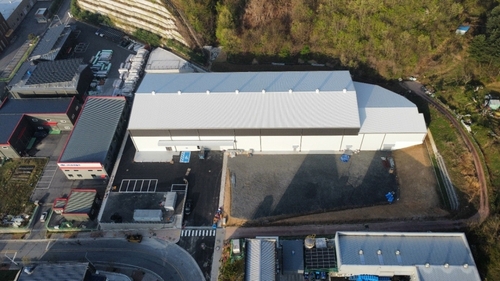
Located approximately 100 metres from the existing facility, the second plant has been designed to integrate the full manufacturing process, from flow-battery stack production to complete battery-system assembly. The expanded production base will enable HTWO Grid to respond more effectively to growing demand from domestic and international long-duration energy storage projects.
HTWO Grid has also installed a 1 MWh vanadium flow battery system at the new plant. The system is operating continuously as South Korea’s first non-central dispatch power generator based on flow-battery technology. Operational data collected from the installation will be used to train artificial-intelligence models and improve the company’s battery-management systems, product performance and operating efficiency.
“The Gyeryong second plant is a key production base for meeting growing global demand for vanadium flow batteries,” said Han Shin, CEO of HTWO Grid. “With an annual production capacity of 1.2 GWh, we will strengthen our ability to support projects in South Korea and overseas.”
The expansion comes as international markets introduce stronger support for long-duration and non-lithium energy storage technologies. In Japan’s latest long-term decarbonisation power auction, non-lithium storage secured approximately 700 MW, exceeding the roughly 551 MW awarded to lithium-ion battery projects. The United Kingdom’s Cap and Floor mechanism is also creating new opportunities for technologies including vanadium flow batteries, zinc-based batteries and compressed-air energy storage.
Demand for these technologies is being driven by the need for improved safety, long operating life and greater diversity in energy storage. Vanadium flow batteries are particularly well suited to large-scale stationary applications because they offer a low fire risk, operating lives exceeding 20 years and discharge durations of more than eight hours.
“As demand for safety, long-term operational stability and technological diversity continues to grow across the energy storage market, we will expand the application of vanadium flow batteries and build on their distinctive performance advantages,” Han added.
The new Gyeryong facility positions HTWO Grid to participate in the continued expansion of the global long-duration energy storage market while strengthening the manufacturing base for vanadium flow battery technology.