Hubei Changyang 50MW Vanadium Flow Battery Energy Storage Station Achieves Initial Grid Connection

Date: 25 May 2026 |
Source: VRFB-WeChat, 25 May 2026
The 50MW Vanadium Flow Battery (VFB) Energy Storage Station in Changyang, Hubei Province, China, has successfully connected its first 20MW of storage capacity to the grid, marking a significant milestone in the development of large-scale energy storage infrastructure in western Hubei.
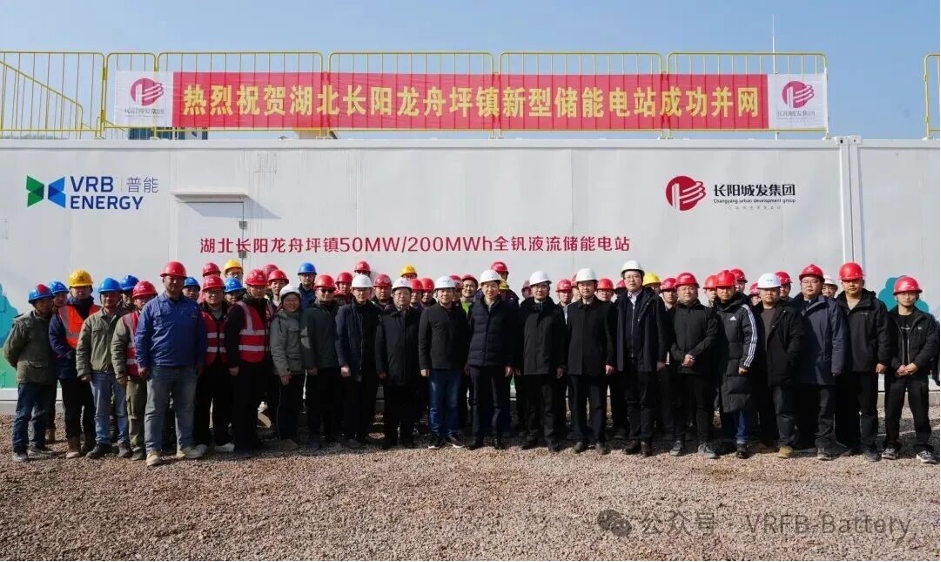
Located in the Changyang Economic Development Zone, the project is the first new-type energy storage project in Yichang City and the first large-scale grid-side vanadium flow battery energy storage station in western Hubei. The project has a total investment of RMB 560 million and includes the construction of a 110kV booster substation directly connected to the provincial power grid system.
Construction began in September 2025 and has progressed smoothly. According to project representatives, the 110kV transmission line, booster station, and the initial 20MW storage units have already been commissioned and connected to the grid. Final acceptance work is currently underway for the remaining 30MW storage units.
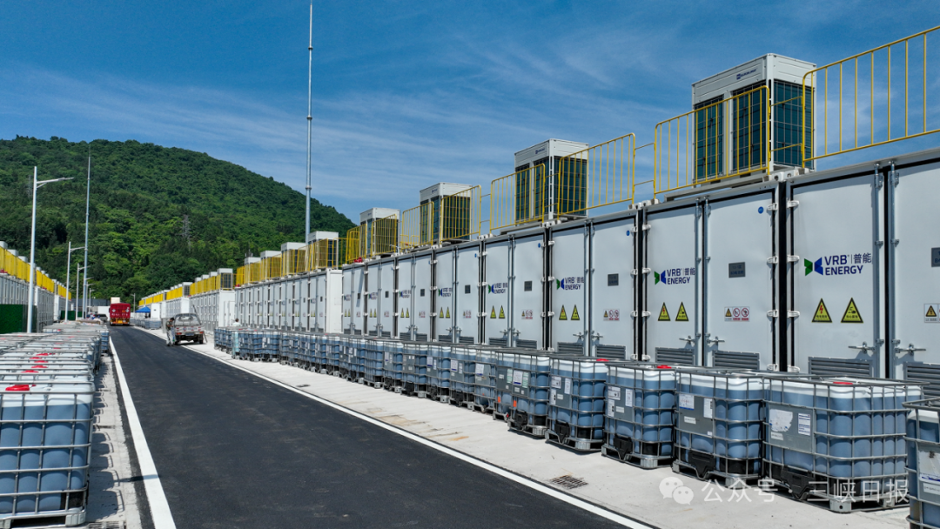
The project utilizes advanced vanadium flow battery technology, providing a safe, long-life, and environmentally friendly energy storage solution. Unlike conventional batteries, VFB systems use liquid electrolytes containing vanadium ions, enabling stable long-duration energy storage with minimal degradation over time. The fully enclosed system also offers high operational safety with no fire or explosion risks.
Designed with 13 energy storage units, the station can deliver a maximum discharge power of 50MW continuously for up to four hours. The system is capable of significantly enhancing regional power reliability, reducing the risk of outages for local industries and residents, and supporting the integration of renewable energy sources such as wind and solar power.
The storage station operates by charging during periods of low electricity demand and discharging during peak demand periods or when renewable generation is insufficient. This “valley charging and peak discharging” capability helps improve grid stability and optimizes energy utilization across the region.
Project officials stated that the facility will strengthen the flexibility and regulation capacity of the western Hubei power grid while contributing to the construction of a modern “source-grid-load-storage” energy system. The project is also expected to accelerate renewable energy adoption and support the development of China’s new power system infrastructure.