Tokamak Energy Advances Development of Vanadium Alloys for Fusion Breeder Blankets

Date: 19 Aug 2024 |
August 18, 2024 – Tokamak Energy, a leading private fusion energy company, has announced a significant advancement in the development of oxidation-resistant vanadium alloys for use in fusion breeder blankets. This initiative is part of the company's broader mission to deliver clean, secure, and affordable fusion energy by the 2030s. The project, which will be conducted in collaboration with Oak Ridge National Laboratory and the University of Birmingham, aims to enhance the performance and safety of fusion power plants.
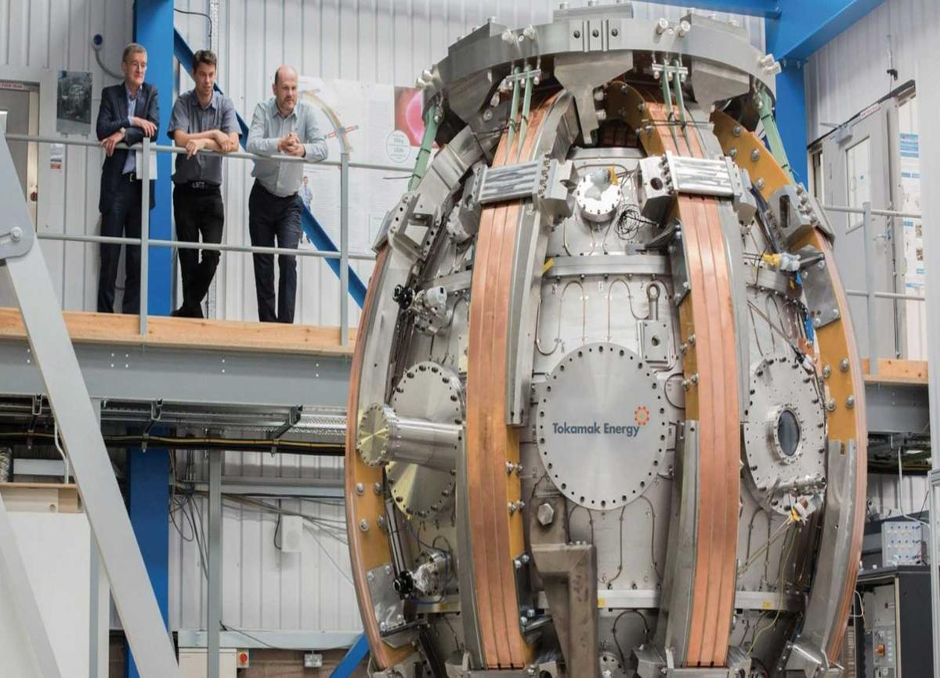
Fusion breeder blankets are critical components in fusion reactors, as they play a key role in breeding tritium and managing heat transfer. Vanadium base alloys have emerged as leading candidate materials for these structures due to their excellent compatibility with liquid lithium and superior high-temperature mechanical properties. However, challenges remain in optimizing these materials to address issues such as oxidation and embrittlement, particularly in oxygen-bearing environments.
Michael Ginsberg, President of Tokamak Energy Inc., highlighted the significance of this project: “Vanadium base alloys are crucial for the future of fusion power plant designs. This new project will push our understanding forward on the path to delivering clean and secure commercial fusion in the 2030s.”
The project has received support from the U.S. Department of Energy (DOE) through its Innovation Network for Fusion Energy (INFUSE) program, marking the ninth INFUSE award for Tokamak Energy. The company is one of eight private firms selected by the DOE as part of the United States’ vision for advancing commercial fusion energy.
The collaboration with Oak Ridge National Laboratory and the University of Birmingham will focus on the thermodynamic modeling, oxidation resistance, and mechanical properties of V-Ti and V-Zr alloys containing between 7 and 15 wt.% Cr. The research aims to develop an advanced vanadium alloy that not only resists oxidation but also maintains or exceeds the mechanical properties of existing alloys like V-4Cr-4Ti.
If successful, this project could lead to the widespread adoption of vanadium alloys in more diverse fusion environments, enabling new design possibilities, enhancing safety under accident conditions, and improving overall plant efficiency.
Jean Paul Allain, DOE Associate Director of Science for Fusion Energy Sciences, commented on the importance of such collaborations: “The INFUSE selections showcase our continuing commitment to the fusion industry in the U.S. and our goal to share widely unique capabilities at national laboratories and U.S. universities. Partnering with businesses and working together is a win-win for our fusion industry, the DOE, and the nation.”